The equestrian calendar is in full swing, but a shadow has been cast over the season. The British Equestrian Federation (BEF) and the British Horseracing Authority (BHA) have issued urgent warnings following a significant spike in Equine Influenza (flu) cases across the UK.
For anyone who travels, competes, or regularly hires external riding arenas, this news means one thing: it’s time to step up our biosecurity.
Because equine flu is highly contagious and airborne, high-traffic spaces like arenas, warm-up rings, and competition venues are the primary hotspots for transmission. Here is what you need to know about how the virus spreads in these environments, and what the governing bodies are recommending to keep our horses safe and our arenas open.
Why Arenas and Venue Hire are Higher Risk areas
Equine influenza isn’t passed from nose-to-nose contact alone. It is a powerful airborne virus. When an infected horse coughs, the virus can travel through the air and settle on surfaces where it can survive for hours, sometimes even days.
In a busy arena or venue hire setting, the risk zones include:
-
Shared Fixtures: Gate latches, mounting blocks, arena mirrors, and cross-ties.
-
The Fenceline: Places where horses might naturally want to touch noses with a horse in an adjacent field or arena.
-
Common Areas: Shared wash bays, water taps, and parking areas where droppings and respiratory droplets are left behind.
If a horse using an arena in the morning is shedding the virus, a horse using that same arena in the afternoon could inhale the airborne particles or pick them up from a shared surface.
What the Governing Bodies are Recommending Right Now
To prevent widespread lockdowns of events and movement, the BEF and other equestrian governing bodies have issued clear guidance for horse owners and venue managers:
1. Shift to 6 Month Boosters
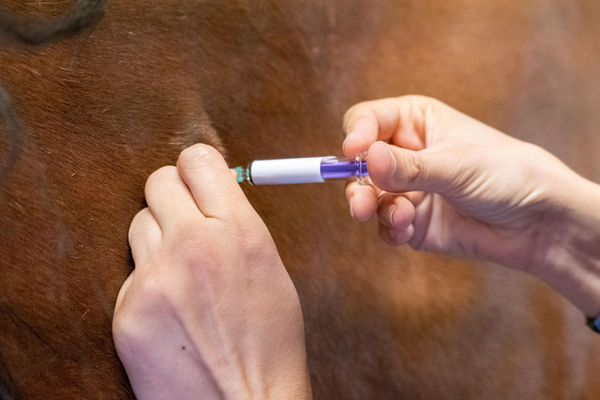
While the legal baseline for many competitions remains an annual booster, governing bodies strongly advise that any horse regularly traveling, competing or mixing should be on a 6 month booster schedule. This provides a vital “immunity bubble” during peak outbreak seasons.
2. Pre-Travel Screening
Before you load your horse into the box, do a quick health check.
-
Take their temperature: A normal temperature is between 37.5°C and 38.5°C. Anything higher is a red flag.
-
Look for signs: Check for a dry, harsh cough, lethargy, or nasal discharge.
-
Rule of thumb: If your horse or any horse on your home yard is showing symptoms, do not travel.
3. Strict Arena Etiquette
When visiting away venues or hiring facilities, practice “social distancing” for horses:
-
Bring your own kit: Never share water buckets, scrapers, or grooming brushes. Fill your own buckets from home if possible, or use the venue tap without letting your bucket rim touch the tap spout.
-
Avoid tie-ups: Do not tie your horse up to common fences or rings outside the lorry where other horses have been. Keep them on the box/trailer until you are ready to tack up and ride.
-
No nose-to-nose contact: Keep a safe distance from other horses in the warm-up or arena.
Play Your Part to Keep the Community Moving
We all remember the devastating impact of past flu outbreaks that brought the competitive season to a grinding halt. By staying vigilant, checking passports and practicing strict hygiene when hiring facilities, we can protect our horses and ensure that local arenas can remain safely open for everyone to enjoy.
Got an arena hire booked? Check for your last booster and pack your own water buckets. Help us keep the equestrian community safe.